What Is That On Your Wrist
“What’s that on your wrist?” a friend asked me yesterday. We participated on an annual walk yesterday and naturally a lot of people wore some sort of smartwatches, himself included.
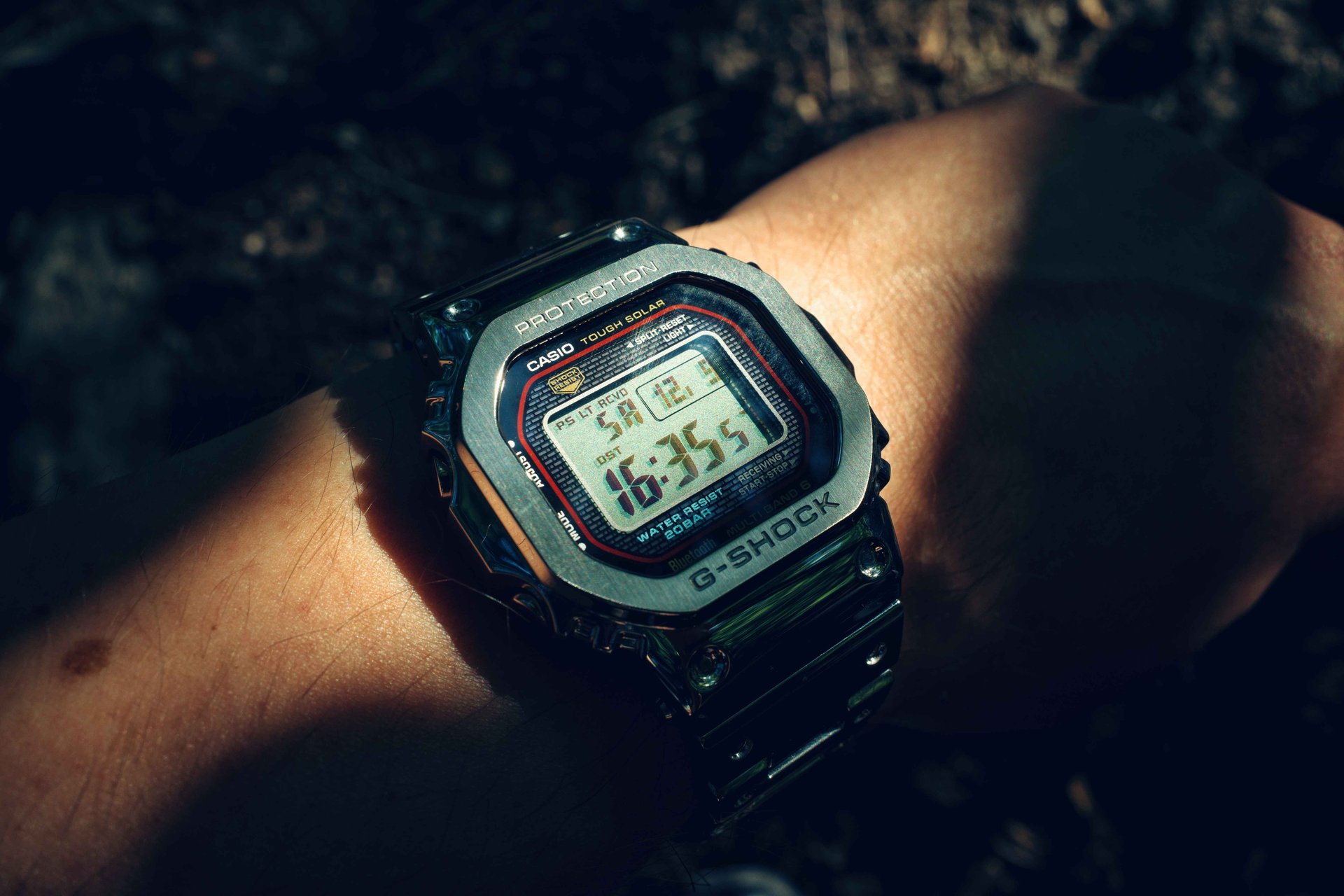
“Oh, that’s my new G-Shock watch, nothing fancy.” I did lie a bit, since the new G-Shock watch is the GMW-B5000D, which arguably is the fancier steel version of the classic resin square. But the watch itself is pretty simple compared to a smartwatch.
Obviously it’s not as pure as a mechanical watch. Compared to that it’s packed with features. Stopwatch, timer, alarm, atomic time, Bluetooth sync, world time. But still pretty standard for a G-Shock and pretty much dumb compared to any smartwatch. I began my watches journey roughly three years ago, when I bought a Citizen Promaster Land watch. I decided that dumb watches are much more practical for my use cases.
I used to have an Apple Watch and a Garmin Fenix watch. But both gave me a constant state of anxiety. Sleep stats, walking stats, sitting stats, notifications, bleh. It was just all too much.
When I chose to get rid of the smartwatch, I naturally started to research classic watches. And what a rabbit hole that is. I found an older G-Shock Square I bought more than ten years ago. It still worked, even though it spent most of its life in a cabinet. The technology behind it is what I find so interesting: a solar-powered watch.
Automatic watches are often touted as buy-it-for-life marvels of engineering. And they are. It ticks on your wrist, without any battery, just springs and tiny wheels. But they have a couple of drawbacks, which are deal breakers for me personally.
-
Accuracy. A mechanical watch is typically always either gaining or losing time. The more expensive it is, the more accurate it should be. But I’m not going to pay the absolutely insane prices watchmakers ask for those. A quartz watch typically loses or gains some seconds as well, but instead of in a single day, this happens over a longer period of time. And I like my watch to be as accurate as possible. Both Citizen and Casio make watches which are already superbly accurate on their own, and don’t cost the price of a car; plus they make sure of it with the addition of a time-syncing option. Be it via radio signal from the six towers around the world, via GPS, or via a simple Bluetooth link.
-
Servicing. A mechanical watch needs service. So does a solar powered quartz watch. But whereas for the quartz one the service means exchanging the battery or capacitor and additionally changing the rubber gaskets. For a mechanical watch it often means a service of the movement as a whole. Guess which one takes longer and costs more. The solar watch can run happily for 15+ years without seeing the watchmaker’s service personnel. That is a true feat of engineering.
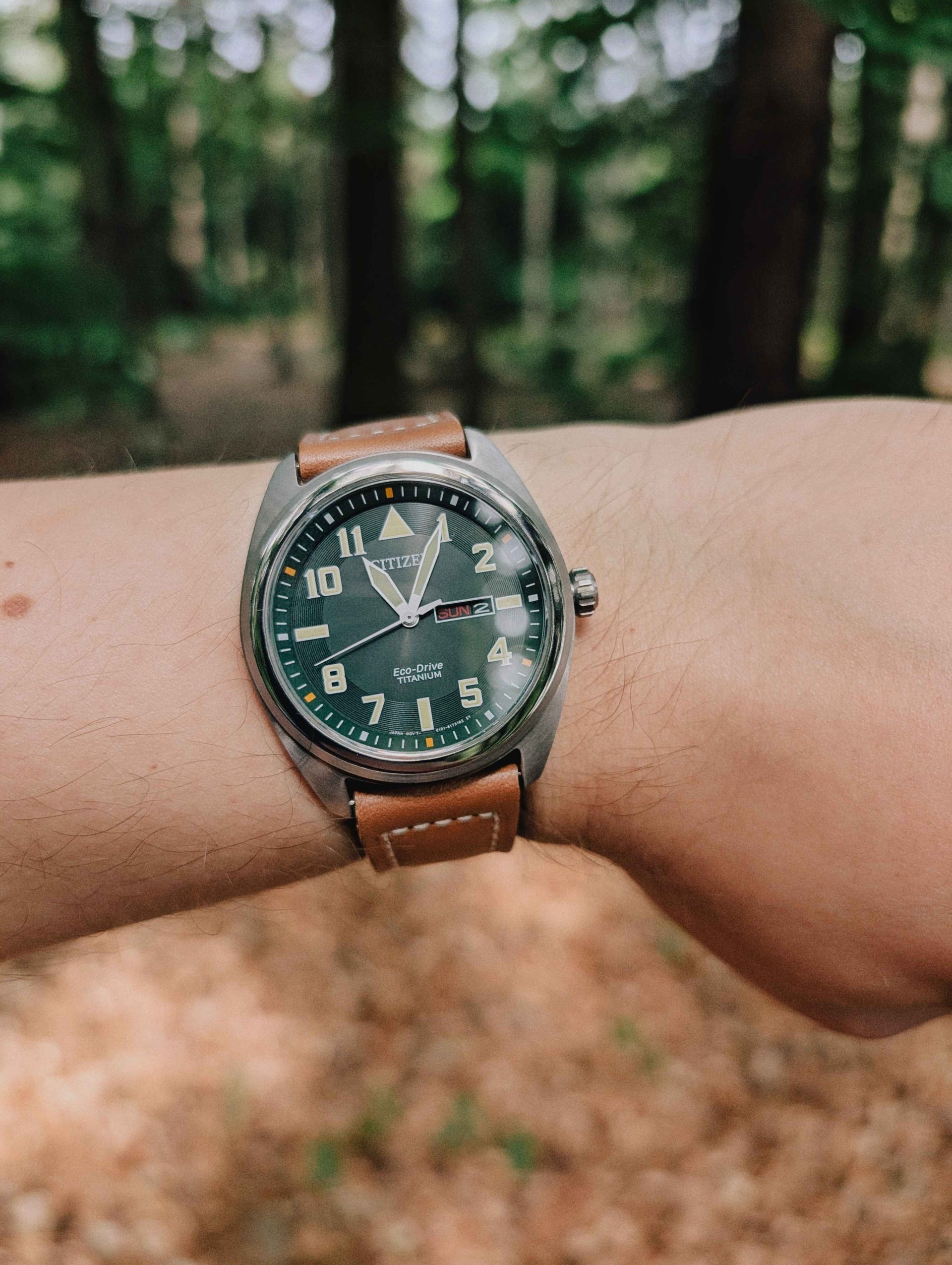
The Eco-Drive from Citizen and the Tough Solar from G-Shock are the true champions of the common man’s watch. Engineered to be reliable, inexpensive to make, always ready and accurate. Sporting features luxury brands would ask up to 10 times more for. A luxury GMT watch can track time across two time zones. Wow! My cheapest non-G-Shock Casio can do that for 30€. With 5 time zones. This diver from an unnamed Swiss luxury brand is water resistant up to 300 meters. Oh my, the Citizen Promaster Tough has a monocoque case made out of titanium with the same water resistance, a real ISO certificate and costs a fraction of the overpriced Swiss jewelry.
Replacing smartwatches is not that hard. A watch should, in the end, do two things: tell you accurate time and work 99% of the time. And for that I don’t need to look at an already outdated technology. It can be modern and simple. And it will work for you, not the other way around.
For replies, send an email to reply@shtfn.xyz